Posted: Wed Dec 18, 2024 11:39 am Post subject: From simple rotors to complex constructions: handles it all
with the Balanset-1A Device
Getting the Equipment Ready
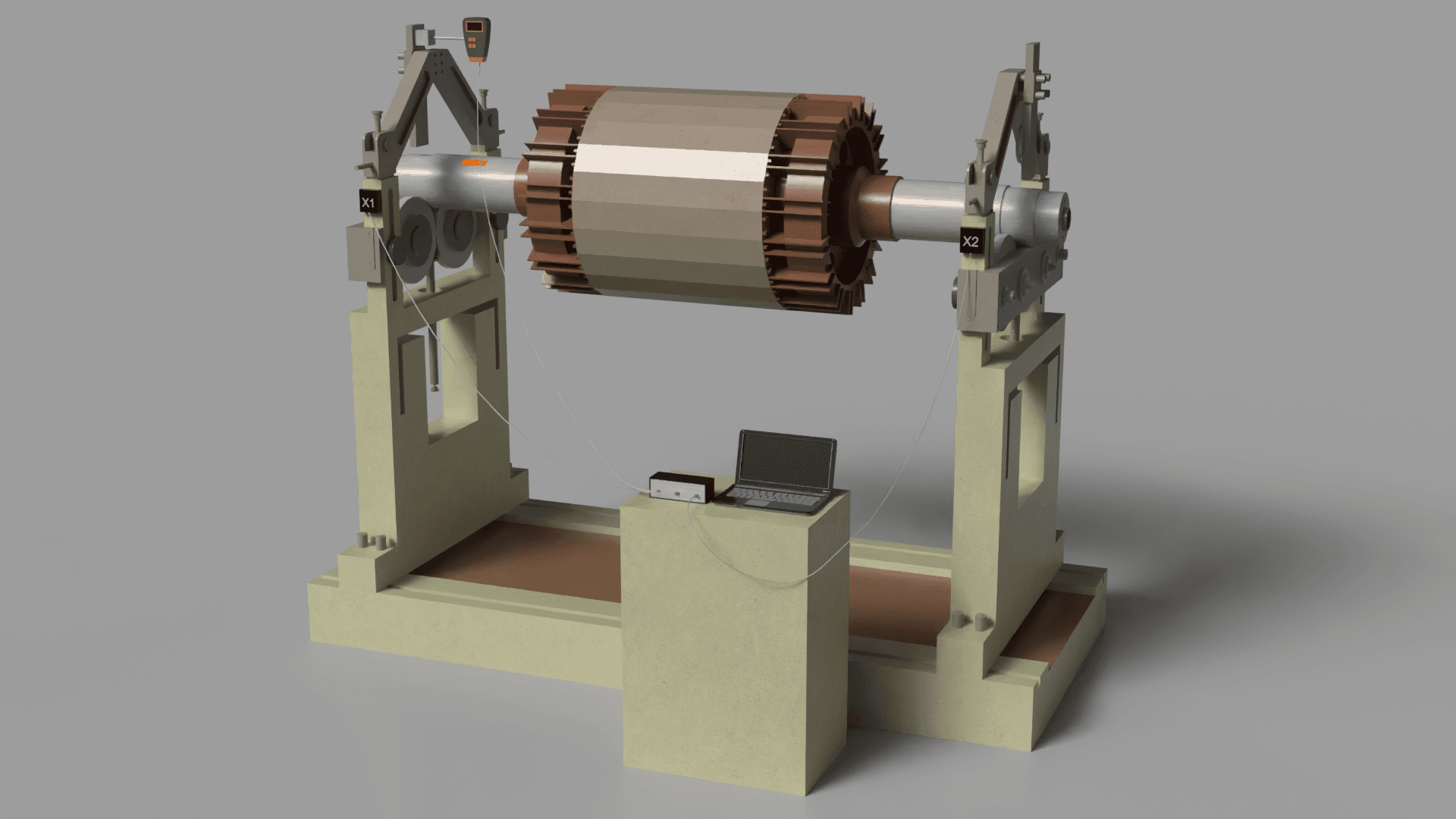
vibration sensors, optical speed sensor, magnetic base, software package, and included accessories.
Connect the device to your PC using the USB interface and confirm the software installation.
Setting Up the Sensors
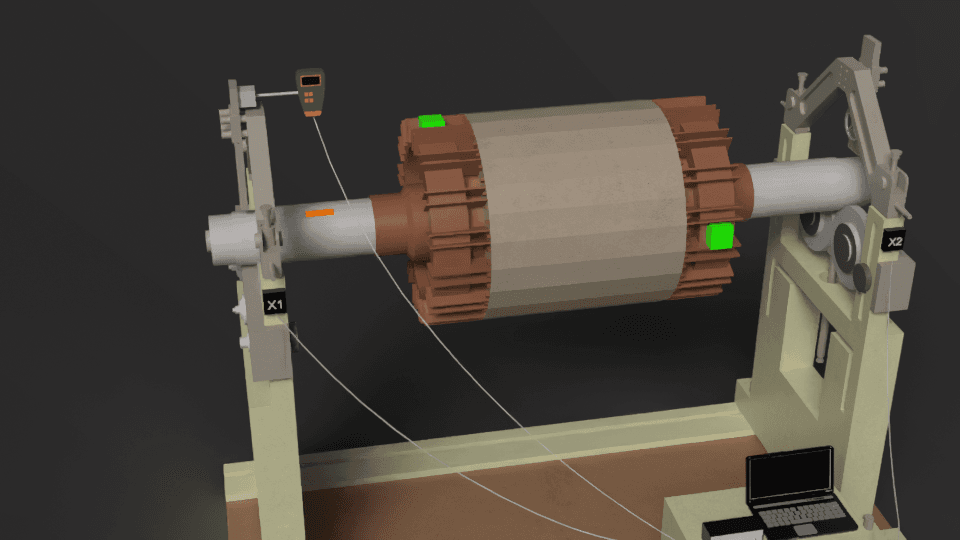
Attach the vibration sensors firmly to the machine casing in areas with the highest vibration amplitude, usually close to the bearing supports.
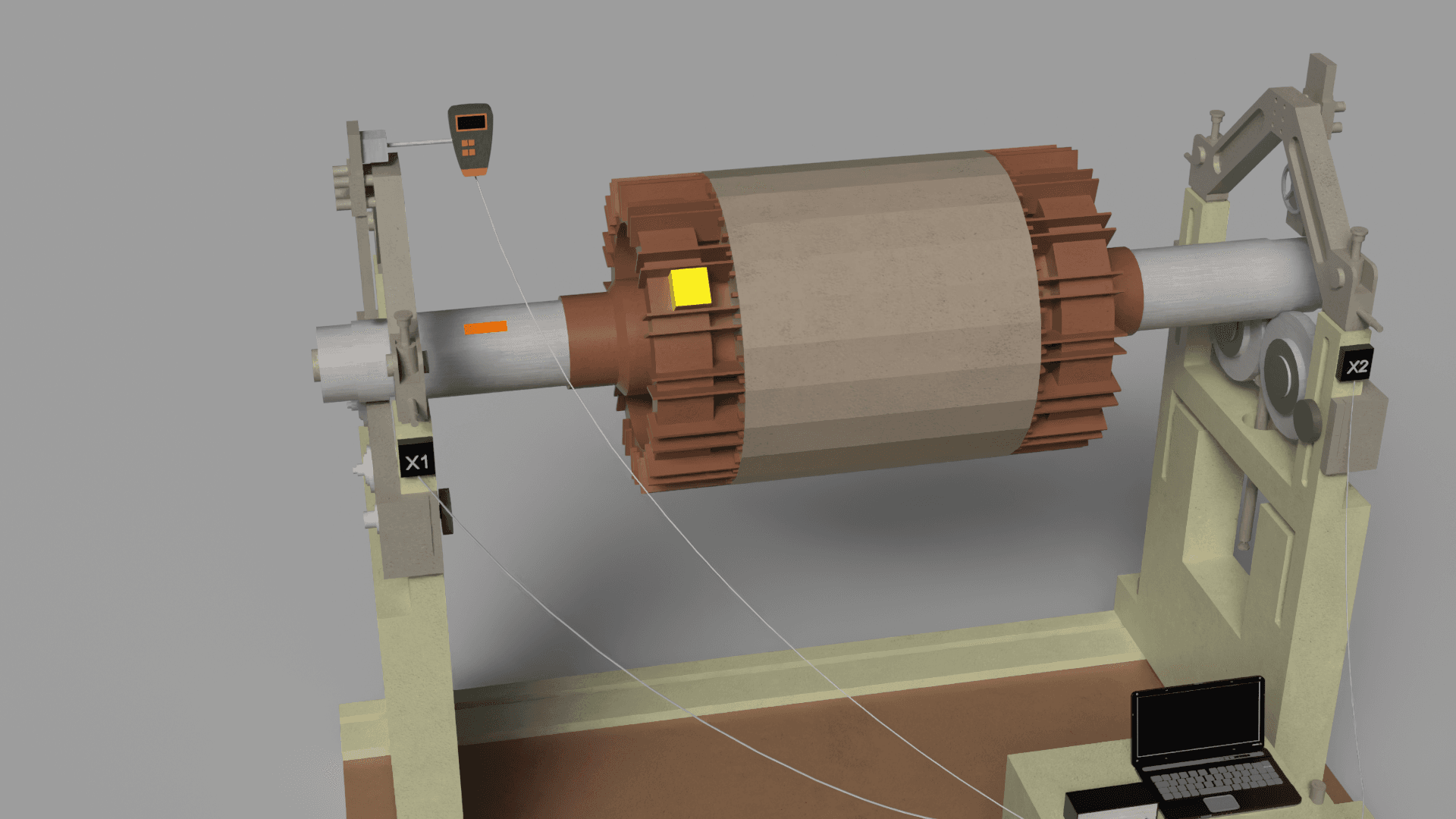
Position the laser tachometer (phase angle sensor) so that it is aimed at the rotor. Attach reflective tape to the rotor for accurate phase angle reading.
Starting the Program
Initiate the Balanset program on your computer.
Configure the software for either single-plane or two-plane balancing, based on the rotor's characteristics and the desired outcome.
Taking Baseline Vibration Readings
Operate the rotor at its intended working speed.
The application will acquire data on vibration magnitude, rotational velocity, and phase angle to determine the initial imbalance state.
Trial Weight Installation
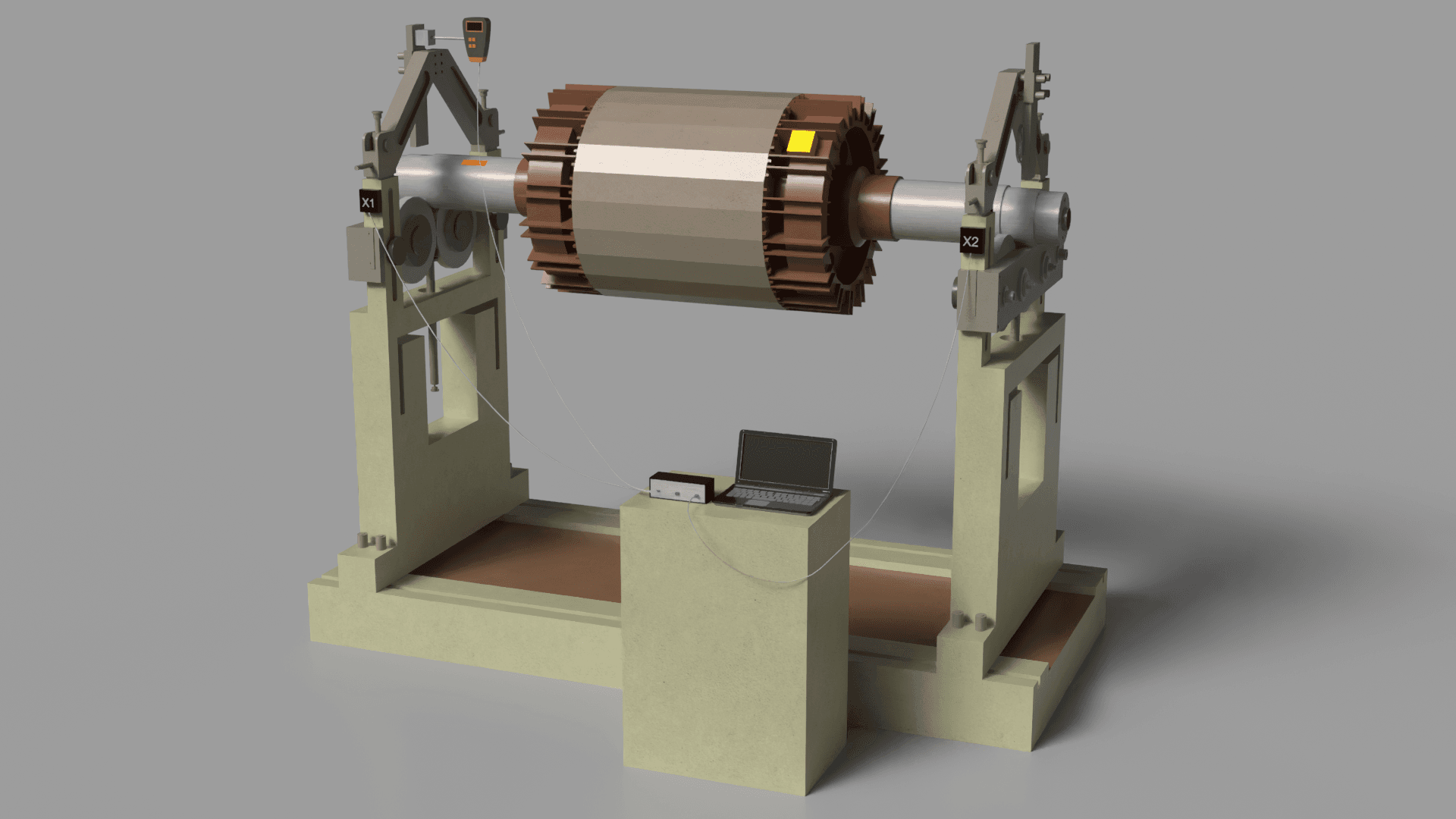
Stop the rotor and attach a trial weight at a specific location on the rotor. The weight's mass can be specified within the software (e.g., in grams).
Resume rotor operation, and the program will capture the resulting changes in vibration amplitude and phase.
Calculating the Correction Weight
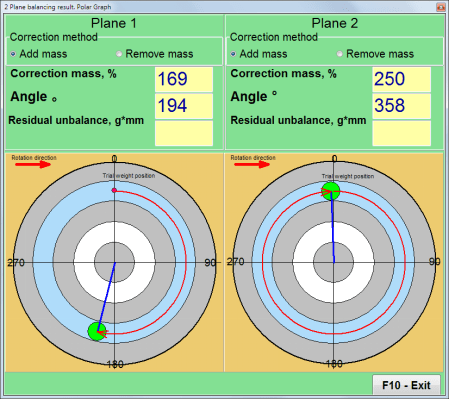
Based on the measured data, the software automatically calculates the correction weight parameters: mass and installation angle.
The calculated values are presented on-screen in both numerical and graphical formats.
Mounting the Compensating Weight
Attach the computed compensating weight to the rotor as indicated by the software's output.
If necessary, perform intermediate checks to verify that the imbalance is being reduced.
Final Check and Balance Confirmation
Once the corrective weight is in place, restart the rotor and measure the remaining vibration amplitude.
The balancing procedure is finished if the remaining vibration is within the permissible limits specified in ISO 1940.
Should the vibration still be excessive, repeat the balancing steps, making further adjustments to the corrective weight as needed.
Creating a Balancing Report
All balancing results are logged and archived within the software, from which you can produce a printable report summarizing the vibration levels, compensating weight, and its installation position.
Post-Balancing Checklist
Ensure all applied weights and attached sensors are firmly fixed in their designated positions.
Check that the rotor's rotation is smooth and free from undue noise or vibration.
If the rotor is part of a complex mechanism, verify the proper interaction of all its components.
Following this procedure enables accurate balancing, minimizes vibration, and prolongs the service life of the equipment.